Infrastructure, Not Integration
Enterprise systems fail because the infrastructure layer is fragmented, inconsistent, and impossible to operate at scale.
This Shift Is Not Optional
Protocol diversity is accelerating.
Brownfield systems persist.
Cloud control has practical limits.
Unified edge infrastructure becomes the default.
This is not a trend.
It is an architectural shift.
Fragmentation Is Structural, Not Temporary
The assumption that enterprise systems will consolidate onto a few standards is flawed. Legacy systems and new specialized protocols remain a permanent architectural constant.
Toyada establishes the abstraction layer that makes protocol heterogeneity irrelevant to the system boundary.
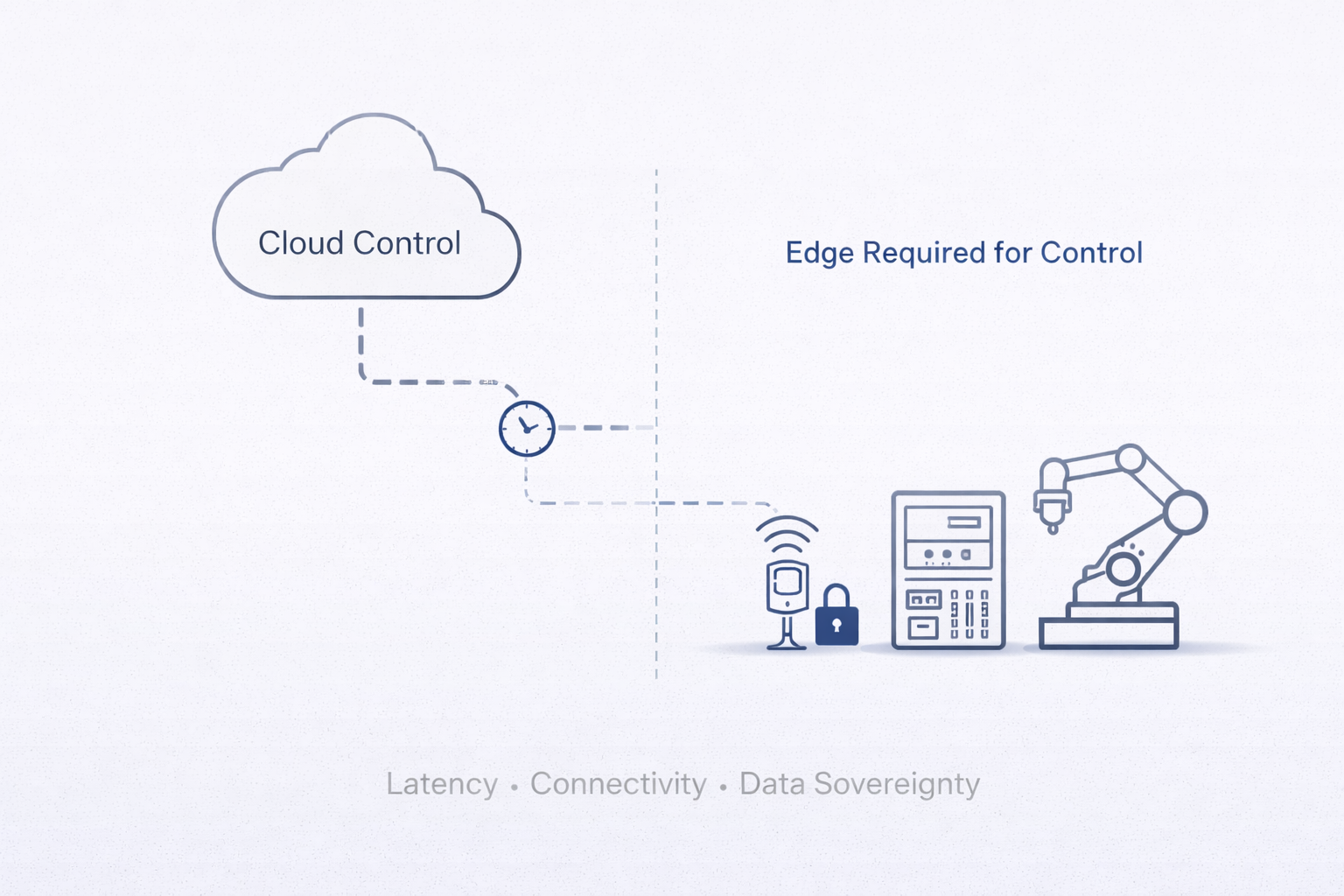
Cloud-Only Control Is Unreliable
Latency, connectivity dependencies, and data sovereignty create hard boundaries for real-time systems. Edge autonomy is required for deterministic operational control.
Brownfield Is The Reality
Infrastructure Persistence
Assets with 20-year lifecycles cannot be replaced. Toyada operates within this brownfield reality.
Protocol Debt
Critical data remains locked in Modbus and BACnet. Coexistence is a mandatory requirement.
Operational Scale
Integrating with SCADA and ERP is required. Toyada becomes the unified control point.
Integration-Led Approaches Fail at Scale
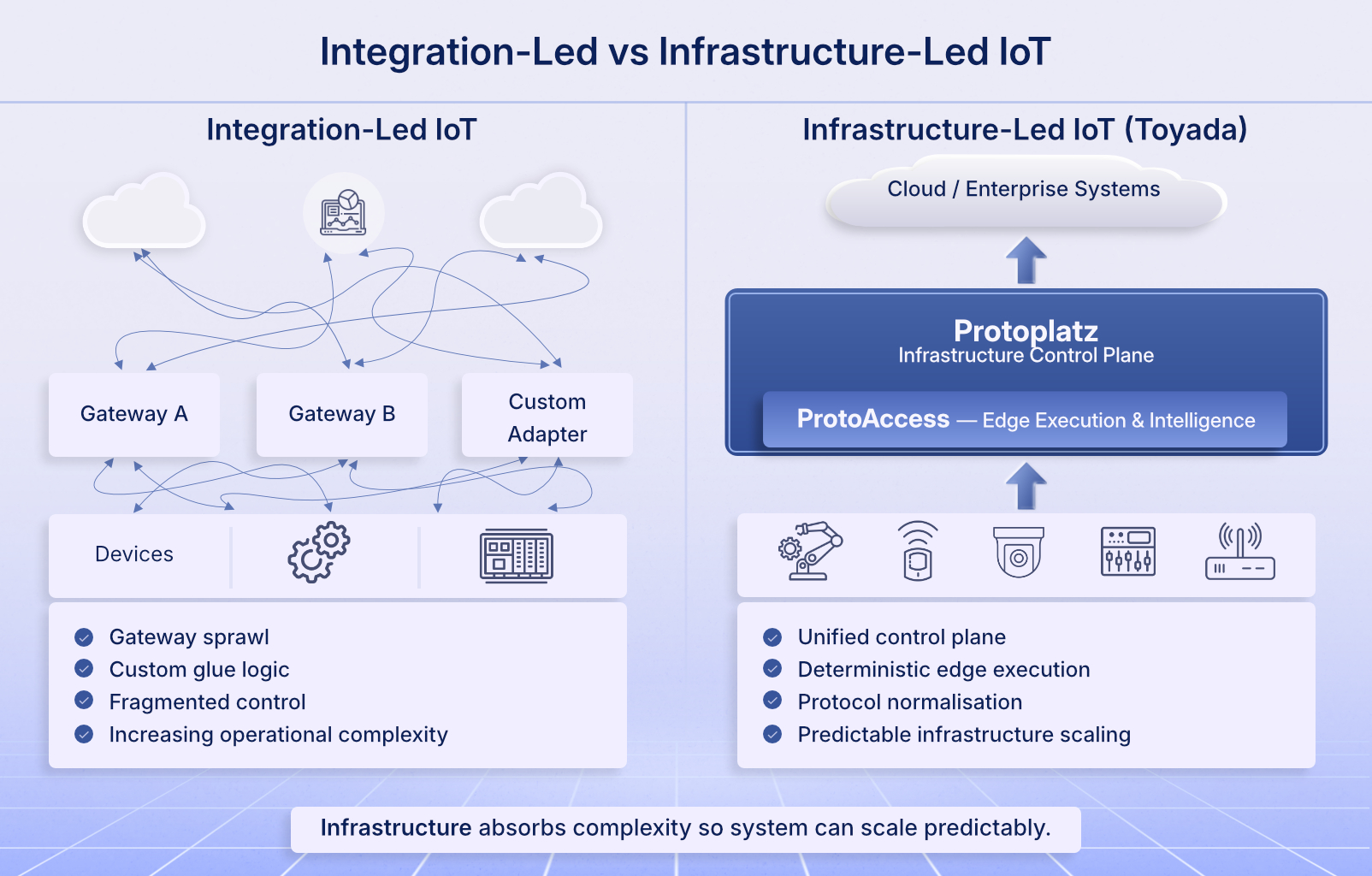
Integration-led approaches create fragile webs of custom logic. Without a unified infrastructure layer, complexity grows faster than control.
Infrastructure-Led Control
Infrastructure-Led Control
The pattern is consistent. Integration-led systems reach a complexity ceiling. Infrastructure-led systems do not.
Contact